
If you've ever crossed your legs before a sneeze, or felt a little nervous about a long car ride, you're far from alone. Changes in bladder control are very common for women, especially after pregnancy and around menopause.
The good news is that the muscles involved can be trained, just like other muscles in your body. Below we explain what the pelvic floor is, why it tends to weaken over time, and why a growing number of women are using an at-home trainer to make that training easier.
Official SculptHer website · 30-day money-back guarantee
What Is the Pelvic Floor?
The pelvic floor is a group of muscles that sits like a supportive hammock at the base of your pelvis, stretching from the pubic bone to the tailbone. These muscles help support the bladder and other pelvic organs, and they work in the background every time you cough, laugh, lift something or stand up.
Like any muscle group, the pelvic floor can lose strength and tone. Common reasons include:
- Pregnancy and childbirth
- Hormonal changes around menopause
- Natural changes that come with age
- Long periods of low activity
When these muscles are weaker, some women notice small leaks during everyday moments, like a sneeze or a good laugh. It's a very normal experience, and it's worth talking about openly with your doctor.
Why Pelvic Floor Exercises Can Be Tricky
Pelvic floor exercises (often called Kegels) are the most familiar way to train these muscles. They're simple and free, and many health professionals recommend them.
The challenge is that these muscles are hidden, so it can be hard to tell whether you're working the right ones. Many women also find it difficult to stay consistent with a routine they can't see or feel progressing.
That's one of the reasons some women look for a tool that guides the muscle work for them.
What Is EMS Pelvic Floor Training?
EMS stands for electrical muscle stimulation. An EMS device sends gentle, adjustable pulses that prompt a muscle to contract and relax. The technology has been used in physical therapy and fitness settings for many years.
At-home EMS pelvic floor trainers apply the same idea in a small, private device. Instead of trying to find and squeeze the right muscles on your own, the device prompts a series of guided contractions while you sit or lie back and relax.
A Closer Look at PelviRestore
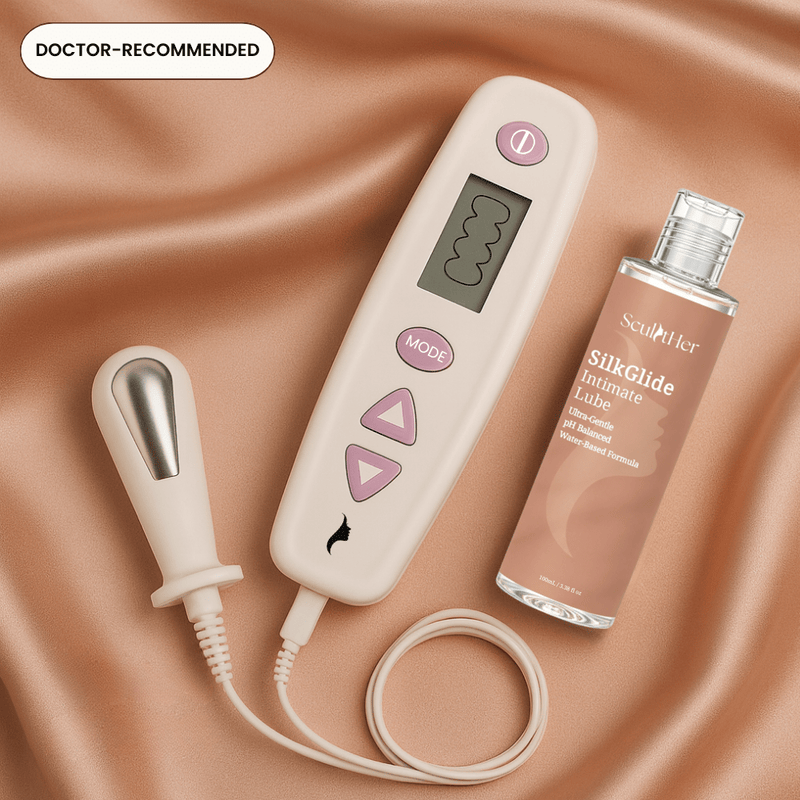
PelviRestore by SculptHer is an at-home EMS pelvic floor trainer designed to help strengthen and tone the pelvic floor muscles. Sessions take about 10 minutes, and many women use it in the evening while reading or watching TV.
What women like about it
- About 10 minutes per session, at home and in private
- Adjustable intensity, so you can start gently and increase gradually
- Guided programs, with no need to figure out the exercises yourself
- Simple handheld controller
- Ships in plain, discreet packaging
What a Session Looks Like
Low, rhythmic pulses ease the muscles into the session.
Longer, deeper guided contractions work the pelvic floor muscles.
Short, quick contractions train the muscles to respond during everyday movements.
As with any training routine, consistency matters, and results vary from woman to woman.
Is It Right for You?
An EMS trainer isn't for everyone. Talk to your doctor before using PelviRestore, and read the product instructions, especially if you:
- Are pregnant or recently gave birth
- Have a pacemaker or other implanted electronic device
- Have had recent pelvic surgery
- Have any ongoing medical condition or symptoms you haven't discussed with a professional
Bladder changes can sometimes be a sign of other health issues, so it's always a good idea to check in with your healthcare provider first.
Price and Guarantee
At the time of writing, PelviRestore is listed on the official SculptHer website at:
30-day money-back guarantee · Discreet shipping
Learn More About PelviRestore →If it isn't a good fit, SculptHer offers a 30-day money-back guarantee. See the official website for full terms.

Common Questions
How long is each session?
About 10 minutes. Many women build it into an evening routine.
Does it hurt?
The intensity is adjustable. Most women start at a low level and increase it gradually as they get used to the sensation.
Can I still do pelvic floor exercises?
Yes. Many women use an EMS trainer alongside the exercises their healthcare provider recommends.
Where can I buy it?
PelviRestore is sold through the official SculptHer website.
The Bottom Line
Changes in bladder control are common, and the pelvic floor is a muscle group you can train. If you've found exercises hard to do on your own, an at-home EMS trainer like PelviRestore may be a convenient way to add guided pelvic floor training to your week. Check with your doctor first, and give yourself time to build a routine.
Learn More About PelviRestore →Official SculptHer website · 30-day guarantee